
Last updated November 23, 2026
 Sweep & inspection
 Caps & crowns
 Flue relining
 Masonry repair
 Gas fireplace service
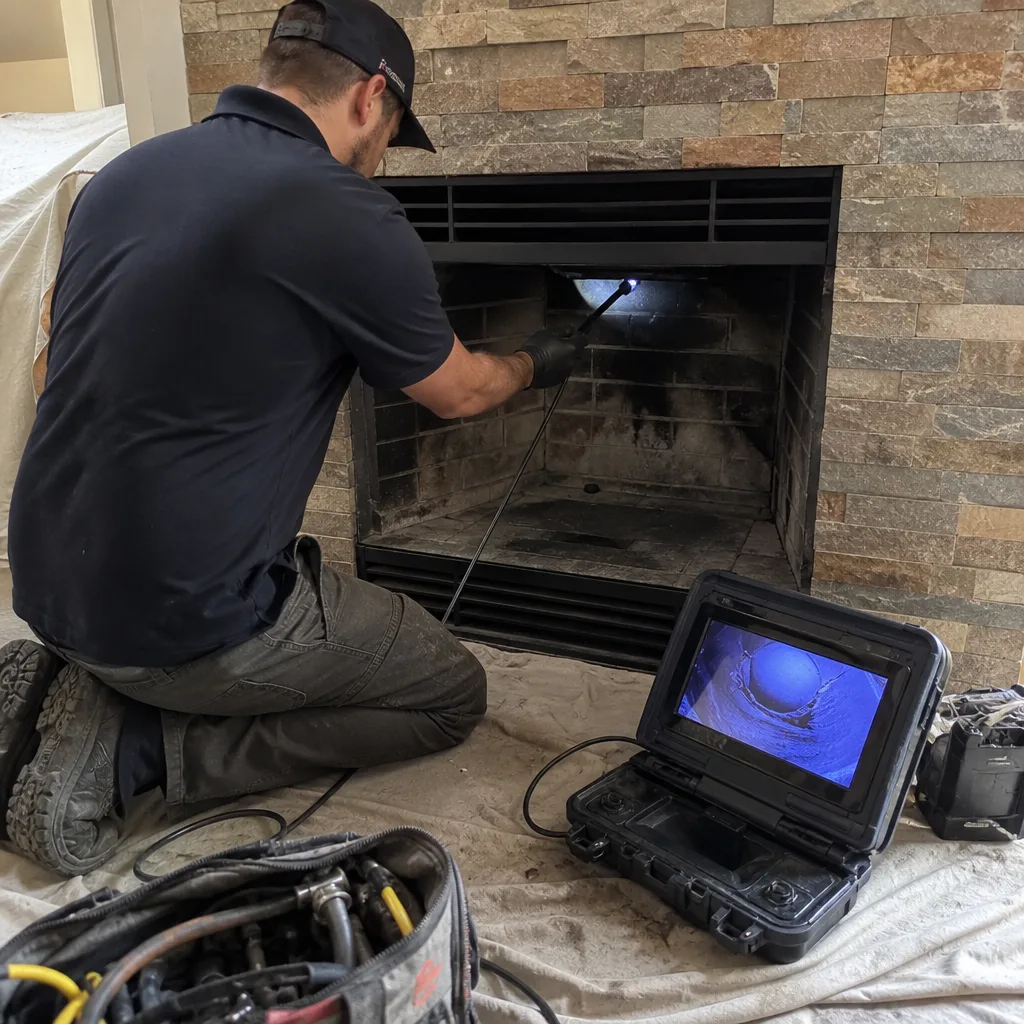
Level 1 sweep and inspection to the NFPA 211 annual standard - flue, crown, cap, and flashing checked and photographed
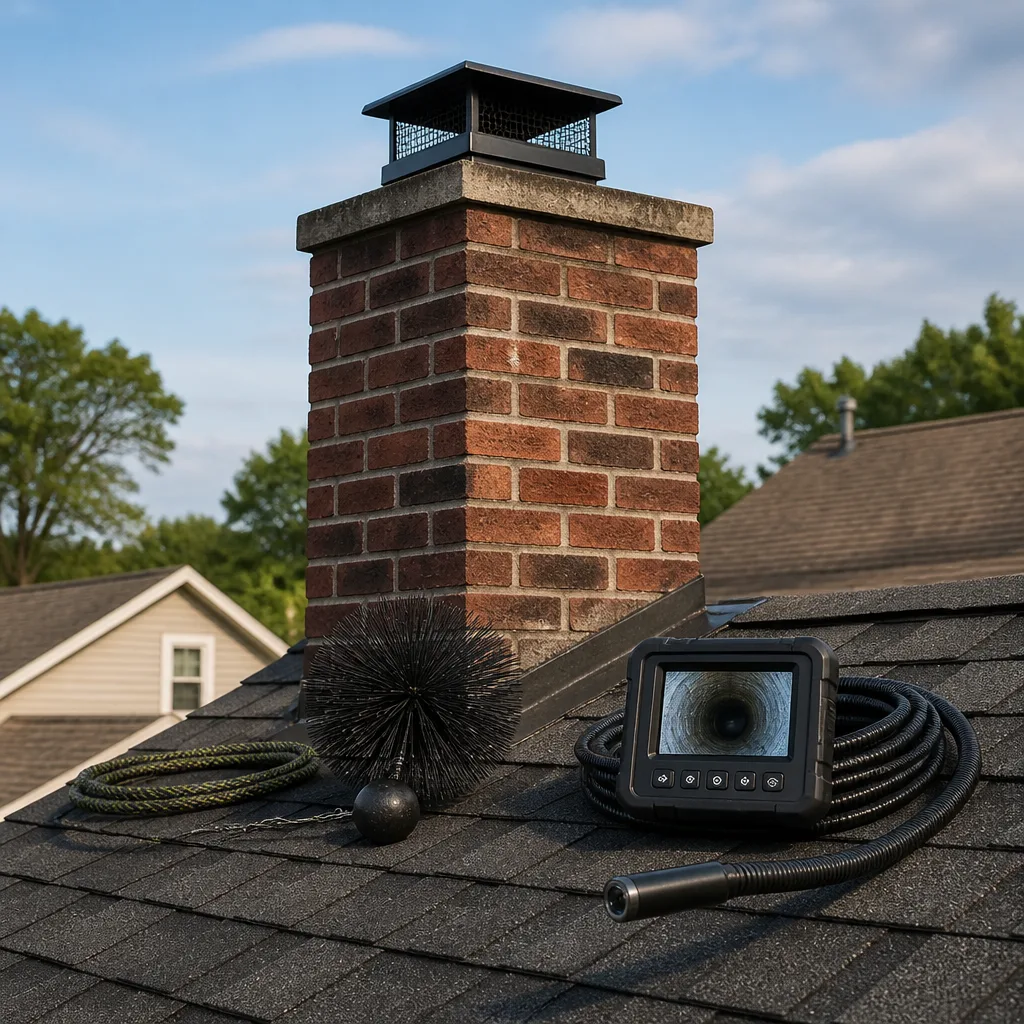
Chimney sweep logs do not sweep chimneys. They loosen some creosote - which then falls where a brush and vacuum still have to collect it.
Chimney Cleaning Emergency Preparedness Guide for Commerce City Homes
A chimney fire doesn’t look like a fire. There are no flames shooting out of the top, no crackling roar from the hearth. Most of the time a homeowner in Commerce City hears a low rumble that sounds like a distant train, notices smoke where smoke shouldn’t be, and stands in the living room trying to decide whether something is wrong. That hesitation is the whole problem. A flue fire can drive temperatures inside the chimney to 2,000°F in under two minutes, and the decisions made in that first window decide how the next month of your life goes. This guide walks through how to spot a chimney emergency, exactly what to do in order, and how Commerce City homes can prepare before anything happens.
Quick Answer
If you suspect a chimney fire, close the damper, get everyone out of the house, and call 911 – in that order. Once the fire department clears the scene, the chimney needs a Level 2 inspection before the fireplace is used again, even if the fire looked small from the outside. Carbon monoxide intrusion and sudden flue blockages follow the same logic: evacuate first, diagnose with a professional after.
Styles & brands we work with
- Sweep & inspection
- Caps & crowns
- Flue relining
- Masonry repair
- Gas fireplace service
Table of Contents
- How to Recognize a Chimney Fire While It’s Happening
- The First Ten Minutes: Immediate Response Protocol
- Carbon Monoxide and Blocked Flues: The Quiet Emergency
- After the Fire Department Leaves: Why a Level 2 Inspection Isn’t Optional
- Pre-Season Preparation in Commerce City: Grassfire Season, Debris, and Caps
- What a Level 2 Inspection Actually Covers
- Building a Chimney Emergency Kit for Your Commerce City Home
- Common Mistakes to Avoid
How to Recognize a Chimney Fire While It’s Happening
A chimney fire is almost always quieter and more subtle than people expect. Flames visible at the top of the chimney are the dramatic version; the common version is a sound, a smell, and a change in how smoke behaves. Because Commerce City sits in a stretch of the Front Range where windy spring days are the norm, chimney noise gets dismissed as wind all the time. Knowing the difference is the first piece of preparedness.
What it sounds like
- A low roaring or rumbling, often compared to a freight train passing in the distance.
- Popping and cracking that continues steadily rather than the occasional snap of a log settling.
- A humming or vibrating sound that seems to come from inside the chimney itself, not the firebox.
- Sometimes a whooshing rush of air, similar to a gas burner igniting but much louder.
What it smells like
A hot metal smell, or a burning smell that doesn’t match the wood you’re burning. Some homeowners describe it as scorched or acrid. If you’re burning dry wood and the smell is sharp and chemical, that’s a signal to stop adding fuel.
What you’ll see
- Dense smoke puffing from the chimney cap, or smoke coming out of the top but not from any other chimney on the block.
- Smoke rolling back into the room through the damper or stovepipe seams.
- Heat discoloration on the chimney pipe housing or the wall near the flue.
- Creosote flakes or dark ash landing on the roof or in the yard – though on a windy Commerce City day, don’t wait for this before acting.
The important distinction: a normal hot fire has a steady, quiet burn and clear exhaust out the top. A chimney fire changes the sound, the smell, and the smoke pattern all at once. If you can’t decide which you’re dealing with, treat it as a chimney fire until someone qualified tells you otherwise.
The First Ten Minutes: Immediate Response Protocol
What you do in the first two to three minutes matters more than anything you do after. The sequence below is not flexible – it’s the order that protects both people and property.
- Close the damper. Yes, before you leave. The damper is the air supply. Closing it starves the fire of oxygen and reduces the draft that pulls flames and superheated gas up into the flue. It also slows the spread of smoke into the living space. This takes two seconds and it’s the single most important thing you can do yourself.
- Get everyone out of the house. Count heads at the meeting spot you’ve chosen in advance. Take pets if it’s safe to do so without delay. Don’t stop to gather belongings.
- Call 911. Tell the dispatcher it’s a possible chimney fire at a residential address. The fire department in Commerce City and the surrounding Adams County area responds to these routinely – they know what to look for, and they’ll check the attic and roofline for extension into framing.
- Do not re-enter. Wait for the all-clear. Chimney fires can compromise the flue liner in ways that aren’t visible from the ground floor, and hot embers can fall through cracks in a damaged liner into wall cavities.
Why closing the damper comes first
Most people instinctively grab the fire extinguisher or head for the door. But an open damper feeds the fire more air and drives temperatures higher. If you can reach the damper safely on your way out, close it. If the firebox is already too hot to approach, leave it and go.
What not to do
- Don’t spray water into a hot flue. Thermal shock can crack a clay liner that survived the fire itself.
- Don’t use a chimney fire extinguisher or “chimney bomb” as your first move – get people out, then worry about the fire.
- Don’t decide it “sounds small.” Chimney fires are often extinguished by lack of oxygen before the fire department arrives, which is exactly why homeowners talk themselves out of calling. Call anyway.
Carbon Monoxide and Blocked Flues: The Quiet Emergency
Chimney fires announce themselves. Carbon monoxide doesn’t. A blocked or partially blocked flue allows combustion gases to back up into the living space, and CO is colorless, odorless, and undetectable without an alarm. In Commerce City, the most common blockage scenarios we diagnose involve nests built during the warm months, deteriorating liner material that has collapsed into the flue, and heavy creosote buildup that narrows the passage without fully closing it.
Warning signs during a normal fire
- Smoke rolling back into the room when the fire should be drafting well.
- Eye irritation, headache, or drowsiness that starts when the fire is lit and improves when you leave the room.
- A fire that struggles to stay lit or burns sluggishly despite dry wood and an open damper.
- Soot streaks above the fireplace opening or on the face of the surround.
- A “smoky” smell in the room that isn’t coming from the firebox.
What to do
If you notice any of these, extinguish the fire safely if you can, open a window, and get everyone outside to fresh air. If anyone has a headache, dizziness, or nausea, call 911 and tell them you suspect carbon monoxide. Then call a professional for a chimney sweep and inspection before you burn again. A flue that’s drafting poorly is a flue that hasn’t been verified open, and there’s no way to verify that from the couch.
Carbon monoxide alarms
If your home doesn’t have CO alarms on every level and near sleeping areas, that’s the highest-value preparedness investment you can make. A CO alarm is the difference between catching a blocked flue as a warning and catching it as an emergency room visit. This is true across Commerce City, and especially in older homes in the northern part of the city where original flues may still be clay-lined.
After the Fire Department Leaves: Why a Level 2 Inspection Isn’t Optional
The fire department’s job is to put out the fire and confirm the house is safe to occupy. Their job is not to assess whether your chimney is safe to use again. Those are two different evaluations, and after any chimney fire – however small it seemed – the second one is mandatory.
What happens to a flue during a chimney fire
Clay tile liners crack under thermal shock. Metal liners warp, separate at seams, or lose their connection to the appliance collar. Mortar joints between tiles break down. Creosote that was glazed onto the flue wall can reignite and burn hotter the second time. None of this is reliably visible from inside the firebox with a flashlight.
Why a Level 2 inspection specifically
Industry practice recognizes three inspection levels. A Level 1 is a visual check of the readily accessible portions of the system. A Level 2 adds a video scan of the entire flue interior and inspection of accessible portions of the chimney exterior and attic, and it’s the level required after a chimney fire, an earthquake, a building change, or a change of appliance. It is the only level that verifies the flue condition end to end.
What to expect from a Level 2 inspection
- A camera run from the top of the flue to the firebox and back, with stills you should be able to see.
- Assessment of liner condition, joint integrity, and creosote thickness.
- A check of the crown, cap, flashing, and masonry above the roofline.
- A report on whether the chimney can return to service, and if not, what it takes to get it there.
Commerce City Chimney Sweep offers inspections as a standalone service, not just as an upsell to cleaning. If you’ve had a chimney fire and want an honest read on the flue, we can run a Level 2 and walk you through the footage. From the firebox to the crown, one call covers the assessment and whatever comes next – whether that’s a sweep, a repair, or a liner replacement.
Pre-Season Preparation in Commerce City: Grassfire Season, Debris, and Caps
The emergency you’re most likely to face in Commerce City isn’t a flue fire on a cold night. It’s a chimney that quietly filled with debris during the warm months and gets lit for the first time in October. The specifics of where we live matter here.
The seasonal pattern
Between roughly September and November, the Front Range grassfire cycle and the fall wind season combine to push debris – tumbleweed fragments, seed pods, dried vegetation, and the occasional bird nest – into chimney caps and flues. Homes near open land in Commerce City’s northern neighborhoods see this most, but it happens across the city. Meanwhile, the wood-burning season starts and homeowners light the first fire without checking. A flue that’s 40% obstructed by a nest doesn’t always announce itself with smoke in the room; sometimes it just drafts a little worse than last year and puts a slow trickle of CO into the air.
The cap is the whole game
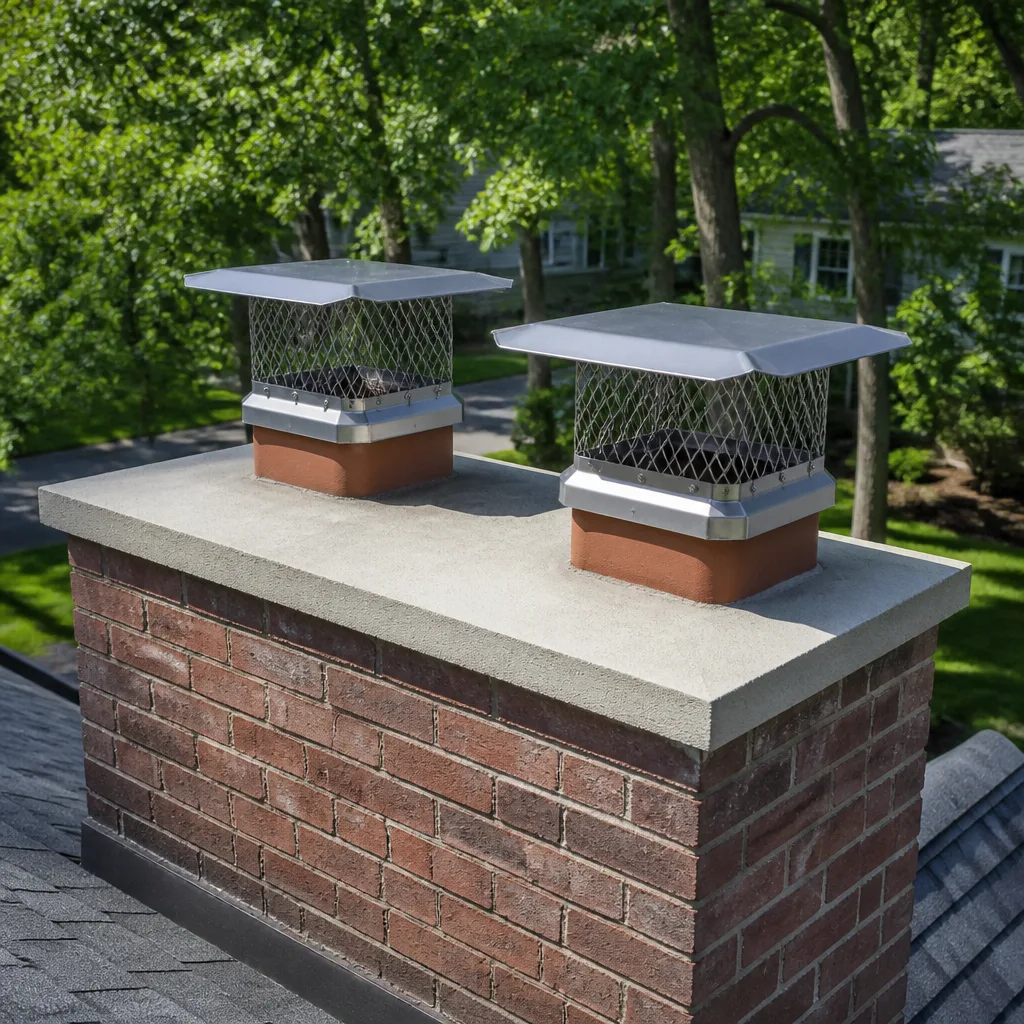
A properly fitted cap with mesh screening is the single most effective piece of chimney preparedness equipment you can install. It keeps animals from nesting, keeps wind-driven debris out, and keeps rain off the flue wall, which is what drives masonry deterioration over time. Caps take a beating from hail, wind, and critter weight. A pre-season check of the cap – is the mesh intact, is the cap still seated, is the crown free of cracks – is a thirty-second visual from the ground plus a professional inspection if anything looks off.
Pre-season checklist
- Look at the cap from the ground. Is the mesh intact? Is the cap level?
- Have the chimney swept before the first fire, not after the season is under way.
- Confirm you have working CO alarms on every level.
- Check that the damper opens and closes fully.
- Clear any vegetation within a safe distance of the chimney crown.
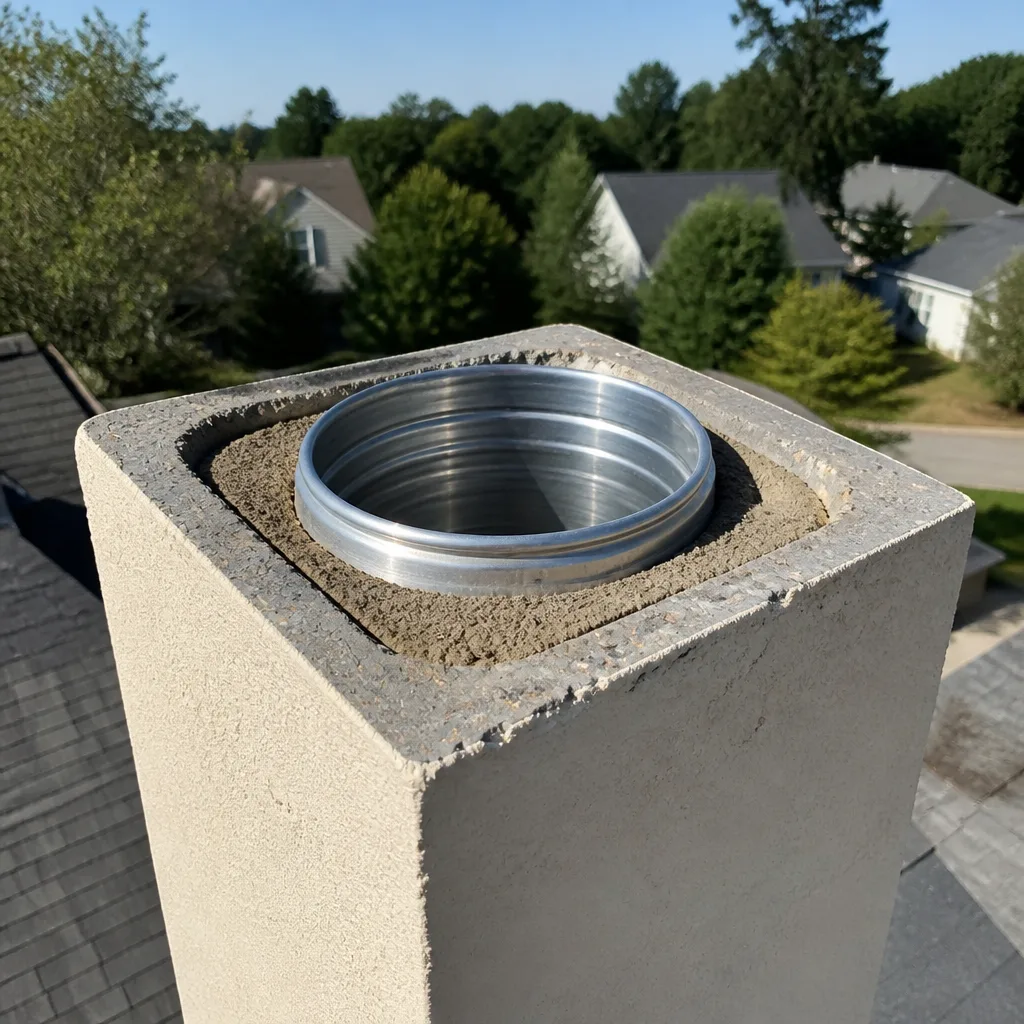
- Inspect the crown for cracking or spalling – this is where water intrusion starts, and water intrusion is what turns a serviceable chimney into a chimney repair project.
We work with caps and crowns from Copperfield and Olympia Chimney because those components need to survive everything Colorado weather throws at them. The right cap installed once beats a cheap one replaced every couple of years.
What a Level 2 Inspection Actually Covers
A Level 2 inspection is thorough enough to catch what a flashlight can’t. It’s the standard we recommend for any Commerce City home that has had a chimney fire, a major weather event, a change in appliance, or more than one season since the last inspection.
The components in scope
- Flue interior: full video scan for cracks, gaps, offsets, and creosote condition.
- Liner integrity: whether the liner is continuous, correctly sized, and connected to the appliance collar.
- Firebox and smoke chamber: mortar joint condition, firebrick spalling, smoke shelf obstructions.
- Damper: full-open, full-close, and seal.
- Crown and cap: structural integrity, seal, and fit.
- Masonry and flashing: where the chimney meets the roof, and the brickwork above.
- Accessible attic and crawlspace: evidence of moisture, staining, or fire damage at the chimney chase.
What the report should tell you
A useful inspection report answers three questions plainly: is this chimney safe to use right now, what’s wrong with it, and what does fixing it involve. If a technician tells you a liner needs replacing after a chimney fire, you should be able to see the footage yourself. Our approach is to put the camera evidence in front of you before recommending anything, and to tell you when something can safely wait – not every cracked mortar joint is a today problem. If a heat-cracked clay tile liner has compromised the flue after a fire, we install DuraFlex stainless liner systems because they restore the flue to a safely vented condition without a full rebuild. But we make that recommendation based on what the camera shows, not on a checklist.
Building a Chimney Emergency Kit for Your Commerce City Home
You don’t need much, but you need it in one place, in a cabinet or closet near the fireplace, and you need to know where it is without looking. The point of a kit is to remove decisions from a stressful moment.
What to keep on hand
- A CO alarm for every level plus one near sleeping areas. This is not optional preparedness.
- A working flashlight with fresh batteries, so you can check the damper and firebox quickly.
- A fireplace poker and ash shovel – standard fireplace tools, kept where you can reach them without moving furniture.
- A small bucket of sand or an ash can with a lid for safe ash disposal. Never put ash in a cardboard box or a plastic bin.
- A written evacuation plan with a meeting spot, practiced at least once with everyone who lives in the home.
- The number for your chimney professional and your home’s service history in the same drawer, so the next person to inspect the chimney has a record to work from.
What to leave out
Skip the “chimney fire suppressant sticks” as your primary strategy. They’re a supplement, not a plan. The plan is close the damper, evacuate, call 911.
Practice the sequence
The most underrated piece of preparedness is just walking through it. Where’s the damper handle? Can everyone reach the front door in the dark? Who grabs the dog? Practicing that once a season means the real moment is muscle memory, not a debate.
Common Mistakes to Avoid
- Burning wet or unseasoned wood. It loads the flue with creosote at a rate that outpaces any sweep schedule, and a Commerce City winter is not the time to discover a thick glazed layer. Season your wood, cover it, and burn dry.
- Burning paper, cardboard, or Christmas trees in the fireplace. They ignite fast and hot, throw embers, and can rapidly overheat the flue. The flue was sized for wood, not for a flare.
- Skipping the pre-season sweep because “the fire’s been fine.” A partially blocked flue doesn’t always show symptoms until it does. The blockage from a summer’s worth of nests and debris doesn’t clear itself.
- Using a chimney fire “log” and calling it preparedness. It’s not a substitute for a clean flue and a proper cap. It can even reduce the draft signal you need to notice a problem.
- Not servicing the cap. A missing or damaged cap in Commerce City is an open invitation. Animals, debris, and rain all find their way into an open flue within a season.
- Assuming the fire department’s all-clear means the chimney is fine. Their check is for structural safety of the house. Your flue needs its own inspection – a Level 2 – before use.
- Putting the chimney on the list to deal with later. Between Commerce City’s fall wind and the first hard freeze, the fall is the busiest time of year for chimney work. Book the sweep and inspection early, before the weather turns and the calendar fills up.
See the difference
 Before
 After
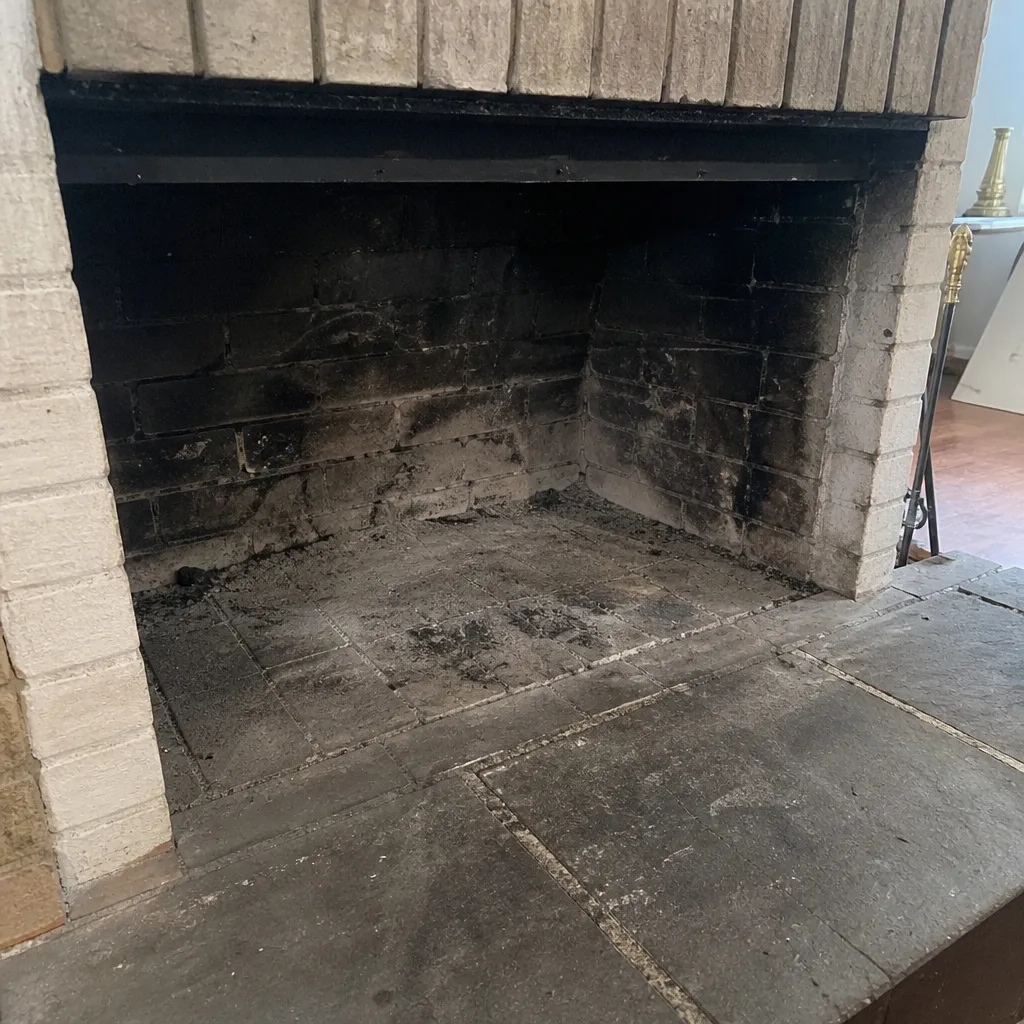 Before
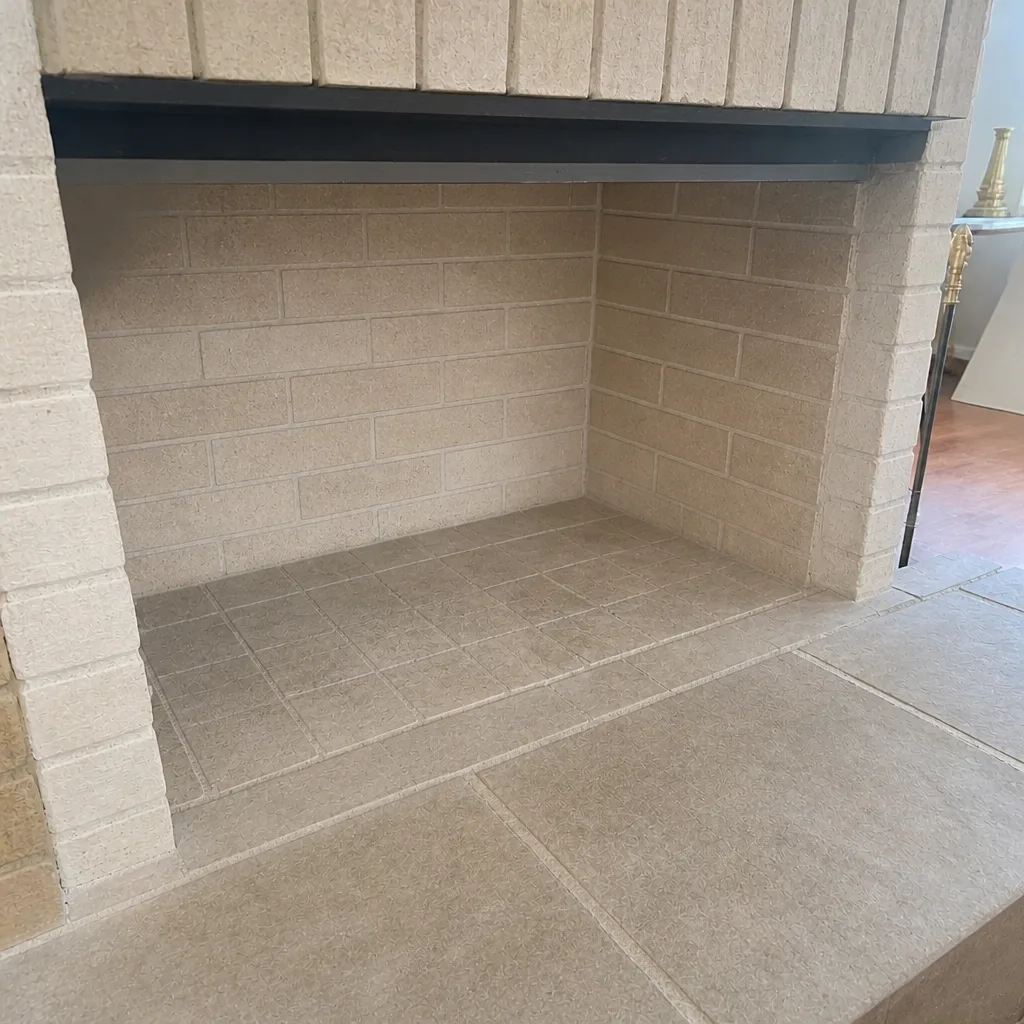 After
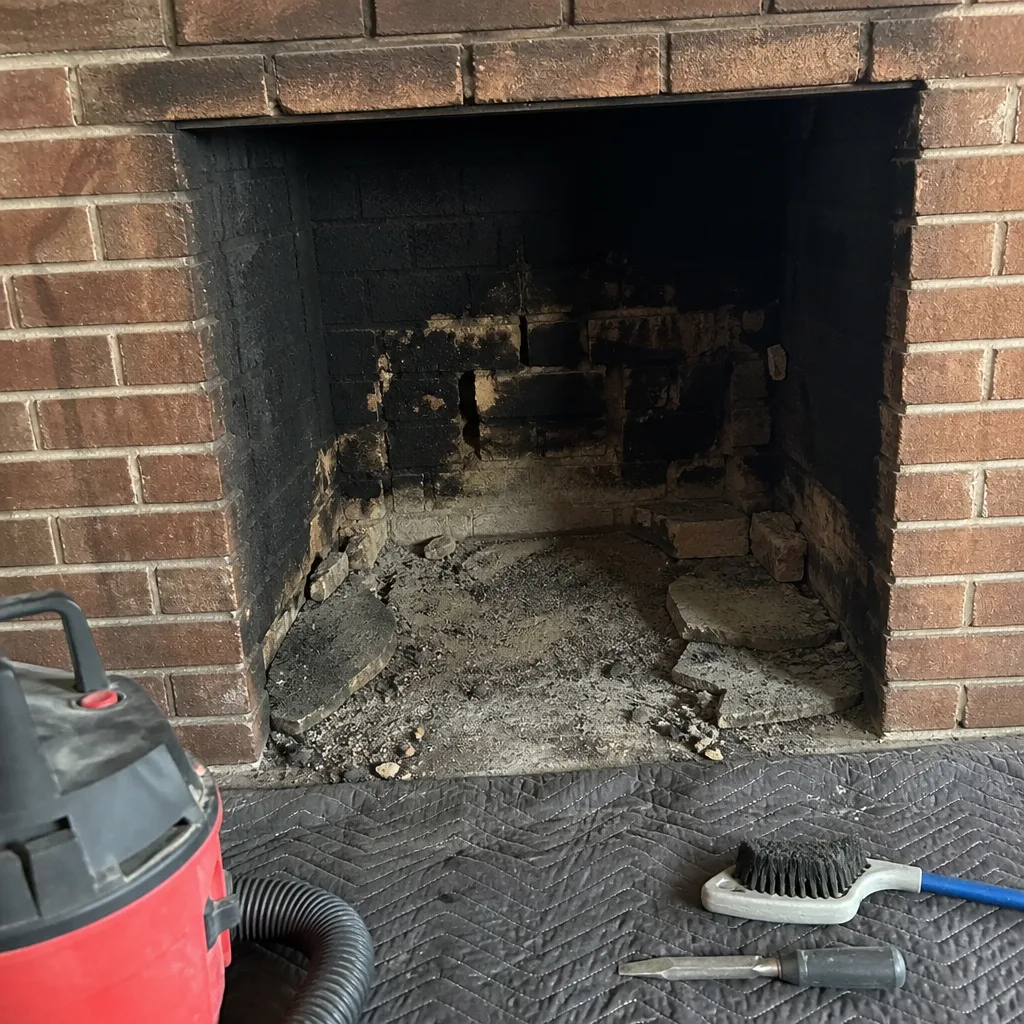 Before
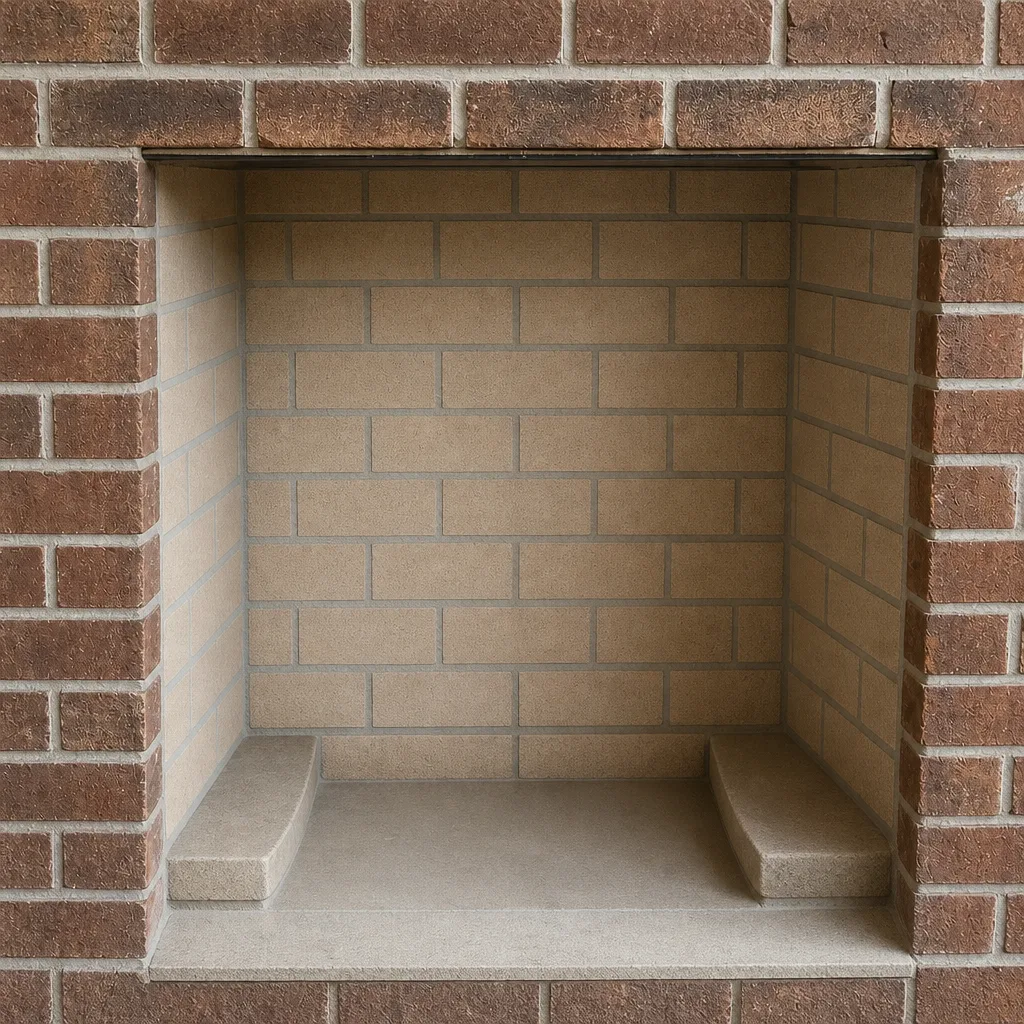 After
When to Call a Professional
Call a professional immediately if a chimney fire has occurred, if smoke backs into the room during a normal fire, if anyone in the home has symptoms of CO exposure, or if the cap is missing or visibly damaged. Call before your first fire of the season if the chimney hasn’t been swept since last year, or if you’ve noticed creosote buildup, an odor that doesn’t clear, or cracks in the firebox. Our technicians have up to 12 years of experience and handle sweep, inspection, fireplace repair, and cap and crown work as a single-vendor service, so nothing gets passed to a second contractor. Commerce City Chimney Sweep offers free estimates in Commerce City. Call (855) 619-0680. We answer 24/7. Fast dispatch from 7am to 7pm, Sunday through Friday.
Frequently Asked Questions
The signs to check, in this order: a low roaring or train-like rumble, dense smoke from the cap, a hot-metal smell, and a fire that’s suddenly much louder than the wood in the firebox would explain. If any two of those are present, close the damper, get everyone out, and call 911. Don’t wait for flames to confirm it – chimney fires are usually not visible from the ground.
Yes. Any chimney fire can crack a clay liner or warp a metal liner, and the damage often can’t be seen without a camera. A Level 2 inspection is the standard of care after a chimney fire because it verifies the flue end to end before the fireplace is used again. Call (855) 619-0680 to schedule one – the estimate is free.
Extinguish the fire if it’s safe to do so, open a window, and get people outside. Smoke rollback means the flue isn’t drafting properly, which can be caused by a blockage, a closed damper, a cold flue, or a liner problem – and a blockage is the one that carries CO risk. Call (855) 619-0680 for a Commerce City Chimney Sweep inspection before you burn again.
The general rule of thumb is once a year for a wood-burning fireplace, and more often if you burn heavily or burn wood that isn’t fully seasoned. In Commerce City, the practical timing is late summer or early fall, after the debris season and before the first fire – so the sweep catches anything that settled into the flue over the warm months. Call (855) 619-0680 for a free estimate.
Yes. A flue that’s obstructed by a nest, a collapsed liner section, or heavy creosote can’t vent combustion gases, so they back up into the living space. CO is odorless and colorless, which is why a working CO alarm on every level is the single most important piece of preparation for a chimney-equipped home. If your alarm has ever gone off, don’t light the fireplace until the flue has been inspected.
The estimate is free, the price is set per job by the written estimate, and you’ll know the flat-price sweep total before we book the work. What the sweep turns up – whether it’s a cap that needs replacing or a firebox that needs HeatShield restoration – gets quoted separately and only after you’ve seen what we’ve seen. Call (855) 619-0680. We answer 24/7. Fast dispatch from 7am to 7pm, Sunday through Friday.
The Bottom Line
Chimney emergencies in Commerce City have a predictable shape. They happen when a flue isn’t verified before the first fire of the season, when a cap isn’t maintained through the wind and debris months, or when a homeowner talks themselves out of calling 911 because the fire “sounds small.” The preparedness that matters is unglamorous: a pre-season sweep, a working cap, CO alarms on every level, a practiced evacuation plan, and a Level 2 inspection after any fire event before the fireplace comes back into use. Our team works across the full system – from the firebox to the crown – so a single call handles the sweep and whatever it turns up. Brands like HeatShield for firebox and liner restoration and DuraFlex for full liner installation are part of the toolkit, but the point is what they make possible: a chimney you can trust to vent safely and a home prepared for the moment something goes wrong. Call (855) 619-0680 for a free estimate.
Written by the team at Commerce City Chimney Sweep.