
Last updated November 23, 2026
 Sweep & inspection
 Caps & crowns
 Flue relining
 Masonry repair
 Gas fireplace service
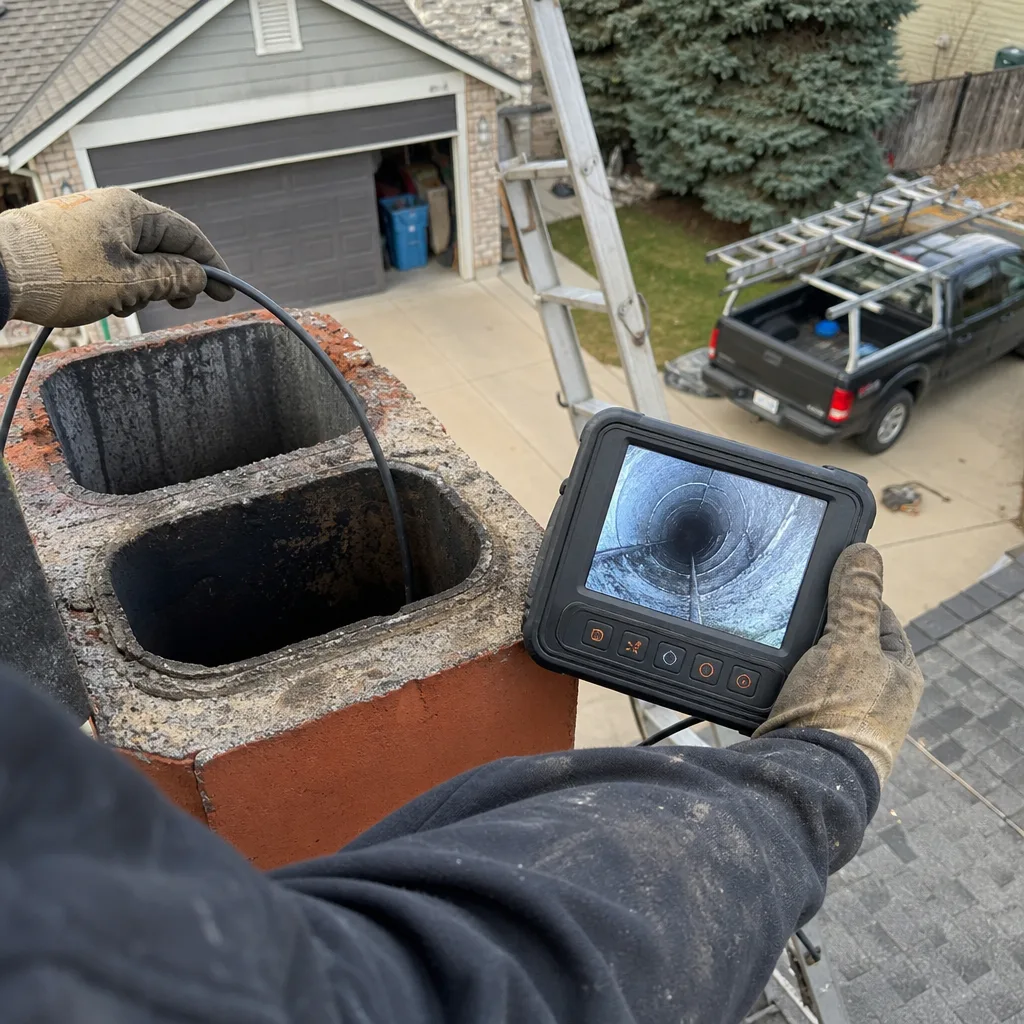
Level 1 sweep and inspection to the NFPA 211 annual standard - flue, crown, cap, and flashing checked and photographed
Chimney sweep logs do not sweep chimneys. They loosen some creosote - which then falls where a brush and vacuum still have to collect it.
Chimney Sweep Maintenance Checklist for Commerce City Homeowners
Most homeowners treat chimney care like a smoke detector: ignore it until it complains. That’s backwards. The parts of a chimney that fail first are usually the quiet ones – a cap that took a hit from hail, a crown that’s been quietly spalling through a few freeze-thaw cycles, flashing that’s pulling away from the masonry. By the time you notice smoke rollback in the firebox, the small problem has had a season or two to grow into structural work. This guide gives you a component-by-component checklist you can actually use, laid out the way a technician works through a Commerce City chimney from the top of the cap down to the hearth.
Quick Answer
A chimney maintenance checklist for Commerce City should cover seven components in order from top to bottom: cap, crown, flashing, flue liner, smoke chamber, damper, and firebox. Each item needs a pass/fail standard and a service interval so you can track changes year over year. A sweep and inspection once a year, an annual visual check after hail season, and a documented log of every condition found are the three habits that keep a chimney system safe and predictable.
Styles & brands we work with
- Sweep & inspection
- Caps & crowns
- Flue relining
- Masonry repair
- Gas fireplace service
Table of Contents
- Why a Component Checklist Beats a Seasonal Reminder
- The Seven-Point Chimney Checklist
- Commerce City Climate Stressors to Inspect For
- What You Can Check Yourself vs. What Needs a Technician
- Service Intervals for Every Component
- How to Log Maintenance History That Actually Helps
- Common Mistakes to Avoid
- When to Call a Professional
Why a Component Checklist Beats a Seasonal Reminder
A calendar reminder tells you when to book a sweep. It doesn’t tell you what to look at, what passed last time, or what a technician found but couldn’t fix that day. That’s the gap a checklist closes. A chimney isn’t one system with one condition – it’s a stack of components that age at different rates and fail for different reasons. The cap lives in the weather. The liner lives in the heat and the chemistry of what you burn. The firebox lives under direct flame. Treating them as one item on a to-do list means the slow failures hide behind the fast ones.
In Commerce City, the case for a structured checklist is even stronger. Our climate puts real mechanical and thermal stress on exterior masonry. Hail moves through the Front Range and lands on cap flanges and crown edges. Freeze-thaw cycles work on any crack that holds water. And the burn season here means a lot of wood goes through a lot of fireplaces in a compressed window. A chimney that gets used hard and weathered hard deserves a record, not a guess.
Here’s what the checklist does for you, in practical terms:
- Turns a vague worry into a specific question. Instead of “is my chimney okay,” you’re asking “did the crown spall further this year.”
- Lets a technician spot trends. A crack that measured the same width two visits in a row is stable. One that grew is a scheduled repair.
- Separates must-do from watch. Not every component needs work every year. Every component needs to be documented every year so you know which is which.
- Protects your repair budget. Water intrusion found early is a cheap fix. Water intrusion found after it reaches the liner is not.
If you want the definition of the service itself, our chimney sweep page covers what’s included in a standard visit and how the cleaning is done. The rest of this guide is about what to watch between visits.
The Seven-Point Chimney Checklist
Work top to bottom. That’s the order the water and the weather travel, and it’s the order a technician will inspect in anyway, so your notes line up with theirs. For each component you get what to look at and what counts as a pass.
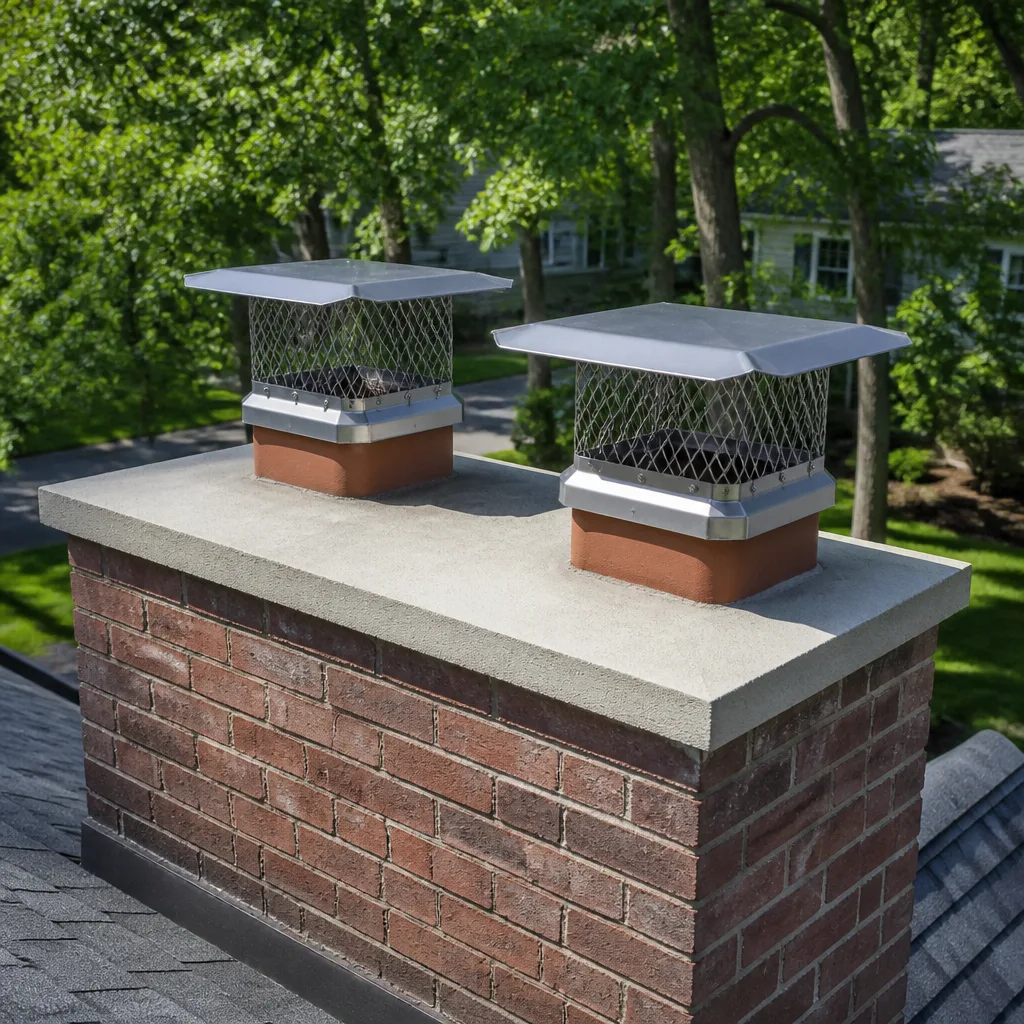
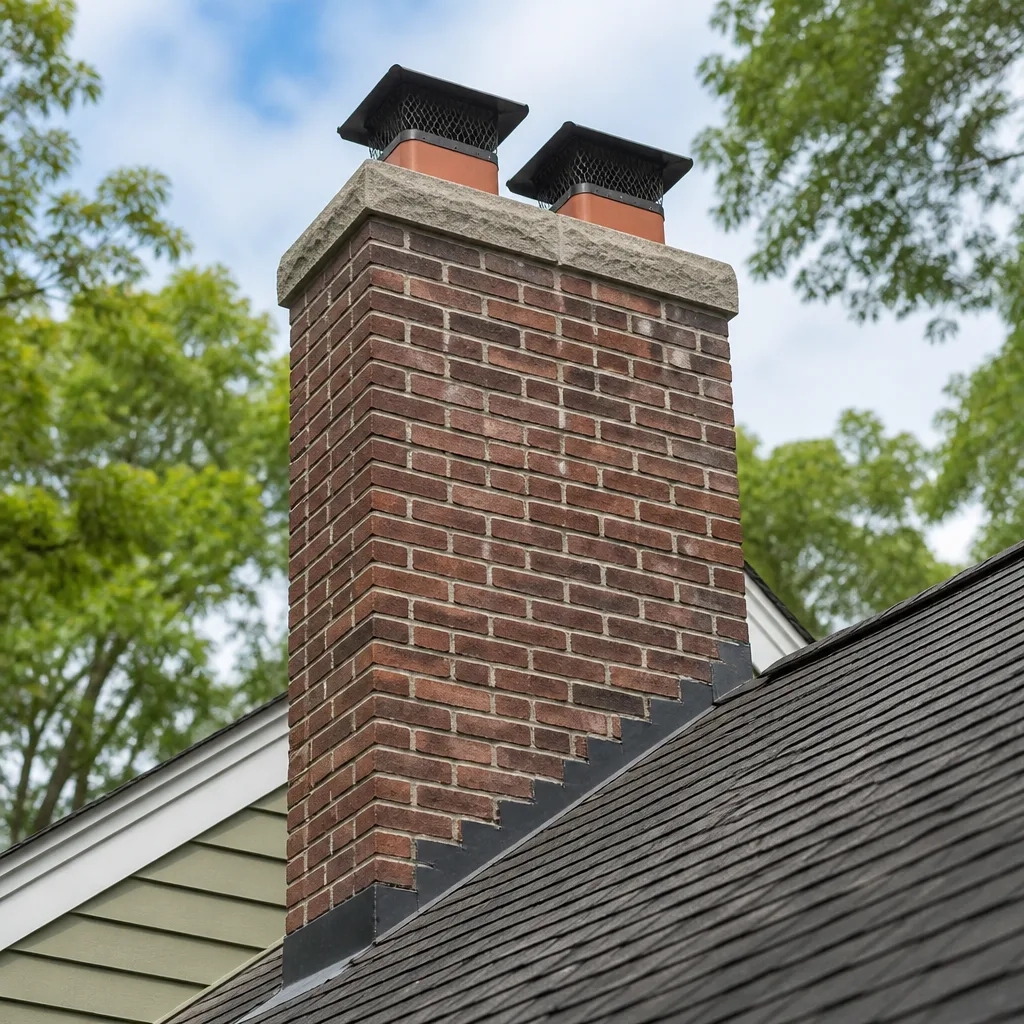
- Chimney cap. Check that the cap is level, that the mesh or screen is intact, and that the mounting legs or flanges aren’t bent or loose. Pass: cap sits flat, no gaps, no tears in the screen. Fail: dents, bent flanges, rust-through, missing fasteners, or an open flue with no cap at all.
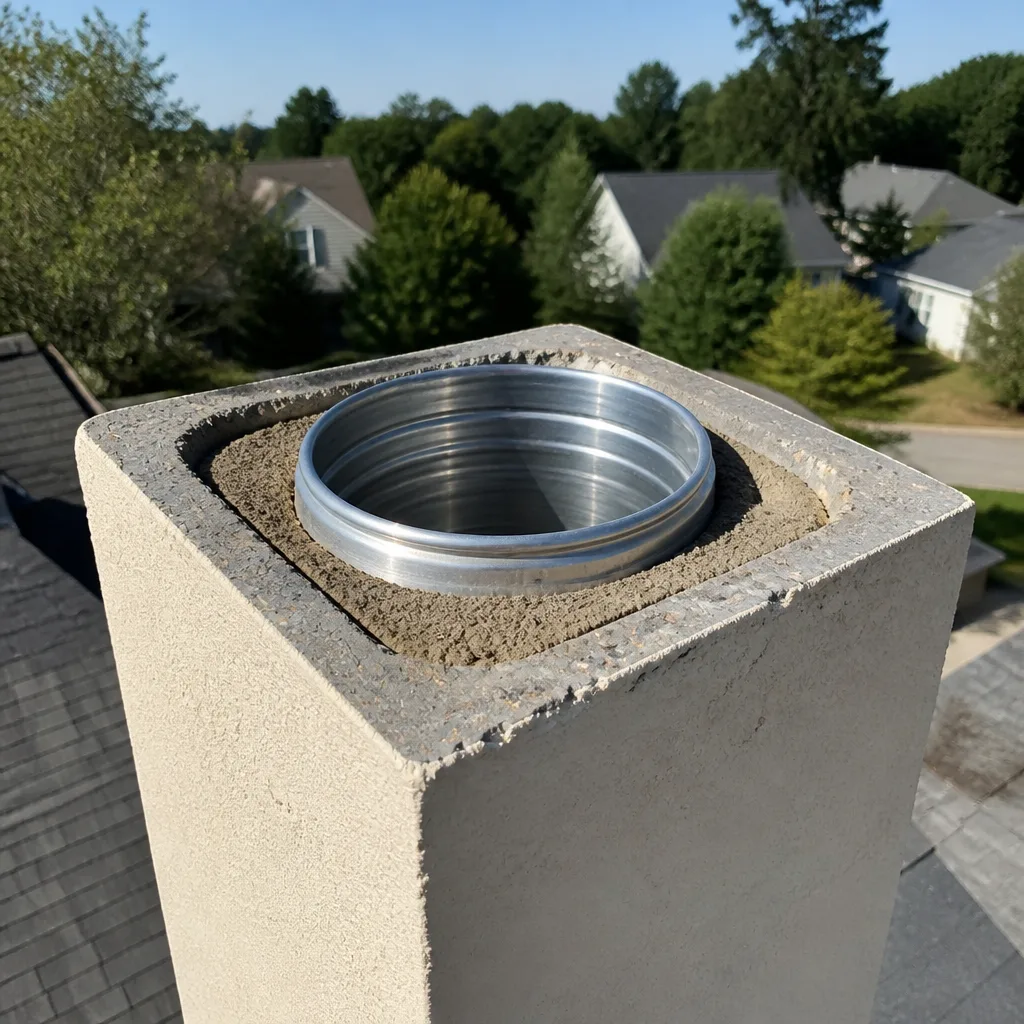
- Crown. The concrete shoulder on top of the masonry. Look for cracks wide enough to catch a fingernail, flaking or powdery surface, or a crown that has pulled away from the flue tile. Pass: tight, sound, water sheds toward the edges. Fail: any crack holding water, spalling, or separation.
- Flashing. Where the chimney meets the roof. Check for lifted metal, dried or cracked sealant, and gaps. Pass: metal sits flush, seams are tight, no daylight visible. Fail: lifting, rusted-through, or open gaps where water can run in.
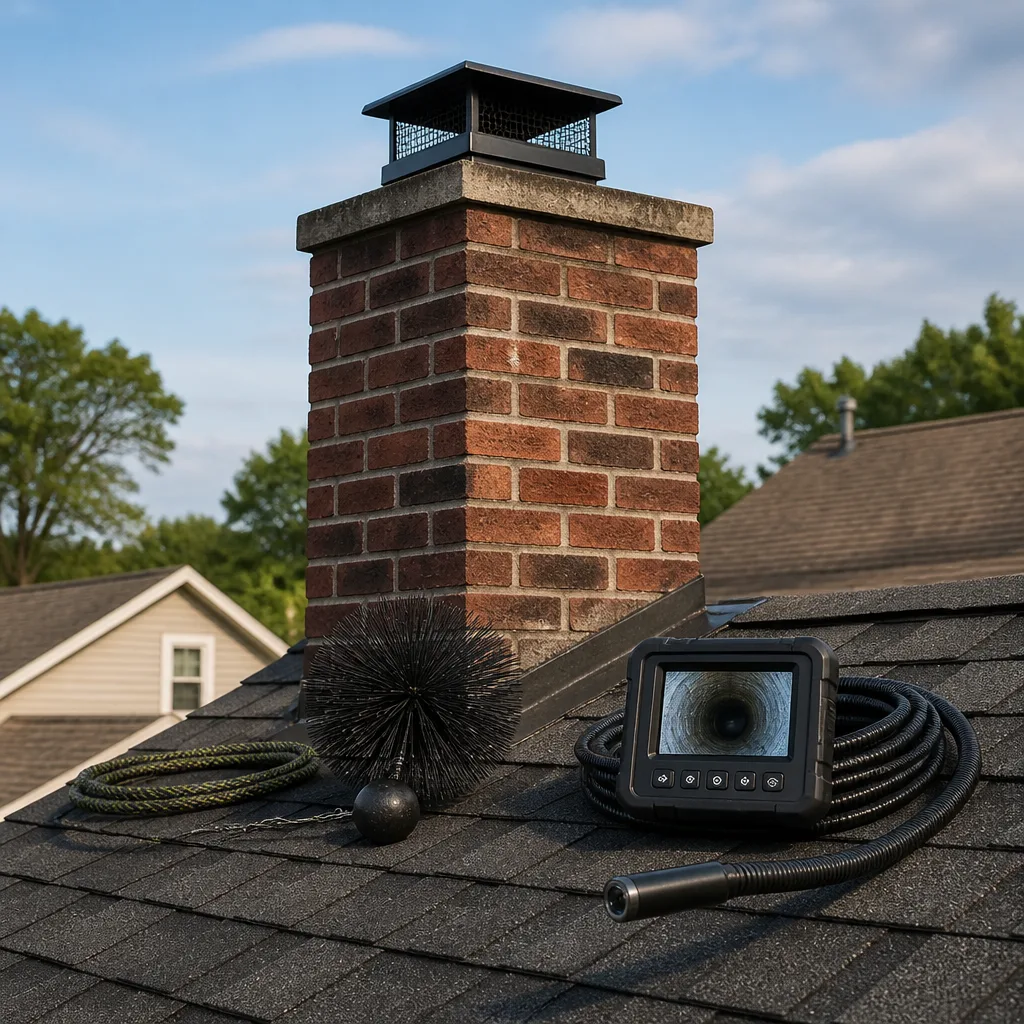
- Flue liner. The interior wall that carries smoke and heat. Pass: continuous, no cracks, no gaps at the joints, no missing sections. Fail: cracked tiles, broken joints, or deterioration that exposes the surrounding masonry. This one requires a camera to judge properly.
- Smoke chamber. The sloped area above the damper that funnels smoke into the flue. Pass: smooth and intact. Fail: rough, cracked, or built-up with creosote and soot that catches smoke on its way up.
- Damper. The door that controls draft. Pass: opens and closes fully, seats flat, no rust-through. Fail: stuck, warped, rusted, or missing a piece.
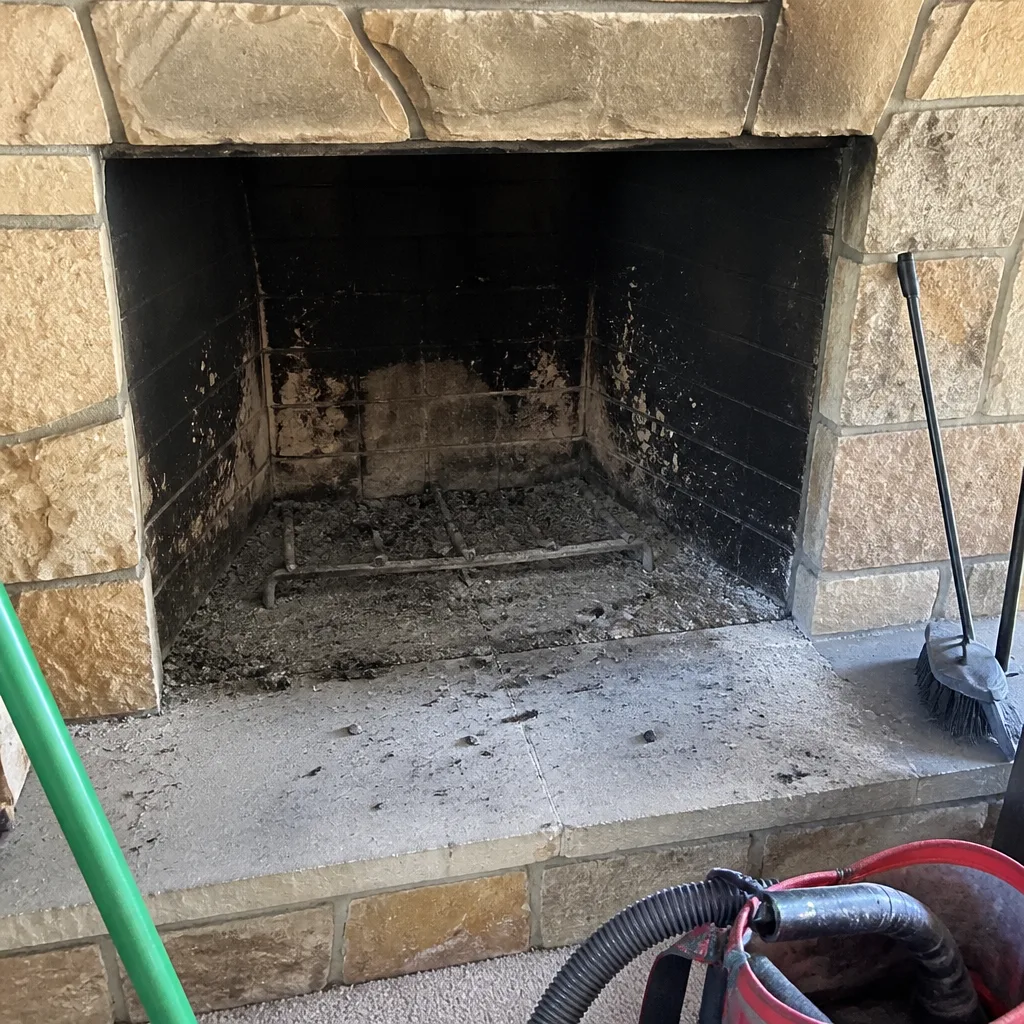
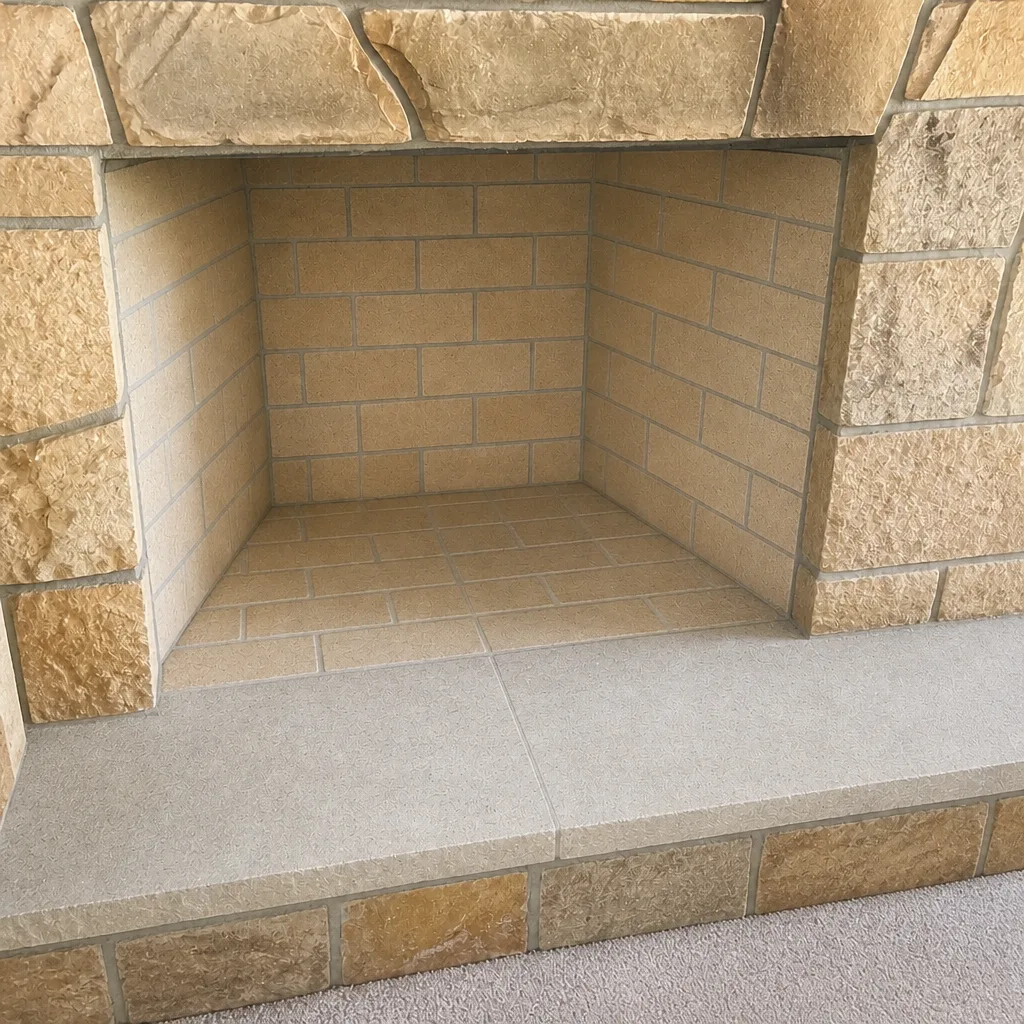
- Firebox. The fire itself lives here. Pass: solid brick or refractory panels, tight joints, no cracks. Fail: cracked or spalled panels, crumbling mortar joints, or gaps where heat can reach the structure behind.
For each item, write down the date, the condition, and what a technician recommended. A fail on the cap or crown is usually a straightforward repair. A fail on the liner needs a closer look, because it’s the component that carries the safety load for the whole system. If you suspect liner damage, our chimney repair page explains what that diagnosis involves.
Commerce City Climate Stressors to Inspect For
A checklist written for a mild climate misses half of what goes wrong here. Commerce City sits on the Front Range with a real four-season cycle, and each season leaves a mark on different parts of the chimney. Checking for these stressors specifically is what separates a local inspection from a generic one.
Hail damage to caps and crowns
Hail is the most common cause of cap damage we look at. A metal cap that takes a hit can bend out of shape, which opens gaps between the cap and the flue. Once that happens, rain and snow get straight into the flue and start working on the liner. On the crown, hail chips the surface, and every chip becomes a place water collects and freeze-thaw can widen.
Freeze-thaw spalling on crowns and masonry
Water gets into a crack, the temperature drops, the water expands, and the surface flakes off. Repeat that cycle across a Front Range winter and a minor crown crack becomes a structural crown problem. Look for powdery or flaking concrete on the crown and on the shoulder of the masonry near the top. If pieces are coming off, that’s spalling, and it doesn’t stop on its own.
Grassfire smoke residue on exterior masonry
During fire season, smoke and ash can settle on the exterior surfaces of the chimney – the masonry, the crown, the cap. Over time this darkens the surface and can trap moisture against the masonry, and it makes it harder to see cracks that would otherwise be obvious. Washing the exterior after fire season and checking for cracks underneath is a sensible yearly step.
Hard burn season
Commerce City winters mean the fireplace works hard for months, then sits for months. That on-off pattern matters. Creosote builds during heavy use, and the summer shutdown gives any moisture that got in a chance to work on the masonry while nothing is drawing draft. A sweep at the end of the burn season, rather than only before it, catches the creosote before it sits all summer. And if you want a fireplace that’s clean and functioning when the season starts, our fireplace repair page covers the firebox and damper side of that work.
What You Can Check Yourself vs. What Needs a Technician
You don’t need a camera on a pole to spot a bent cap. You do need one to judge a liner. The right split is between what’s visible from the roofline or the hearth with your own eyes and what requires a camera, a chimney brush, or a trained hand in the flue. Here’s how we’d sort the seven-point checklist.
Homeowner-verifiable from the ground or the roofline
- Cap condition. Binoculars from the ground or a safe look from the roof reveal dents, rust, and screen damage.
- Crown surface. Cracks, flaking, and off-color concrete are visible from above.
- Flashing. Lifted metal and failed sealant are visible where the chimney meets the roof.
- Exterior masonry. Look for missing mortar, spalled brick faces, or dark streaks that suggest water.
Homeowner-verifiable from the hearth
- Damper operation. Open it, close it, check that it seats flat.
- Firebox panels. Look for cracks, missing pieces, or crumbling mortar. Do not stick your hand into a firebox to test how far a crack goes.
- Smoke chamber, from below. A flashlight up into the damper shows buildup and the shape of the chamber, but not its full condition.
What needs a technician and a camera
- Flue liner. The inside of the flue is where a camera earns its keep. Cracks, joint gaps, and liner deterioration are not visible from below or above.
- Smoke chamber interior. The sloped surface above the damper needs a camera to inspect properly.
- Creosote depth. How thick the creosote is and what stage it’s at needs a trained eye. Stage three creosote is a fire risk and a cleaning challenge, not a driveway mirror project.
- Firebox integrity. What looks like a surface crack can be a heat path into framing. That’s a judgment call for someone who’s seen hundreds of fireboxes.
Service Intervals for Every Component
The question we hear most often is “how often does each part need attention?” The honest answer is that components age at different rates, and the schedule that matters is the annual documentation of every one. Replacement is on condition, not on the calendar. Here’s how we think about the intervals.
- Annual sweep and inspection: once a year for any chimney in active use. This is the baseline for the whole system.
- Cap: inspect annually; replace when damaged or when the screen fails. A damaged cap is often a fast fix and protects everything below it.
- Crown: inspect annually; repair cracks as they appear; replace when the crown is spalling or lifted rather than patching a surface that won’t hold.
- Flashing: inspect annually; reseal or repair when metal lifts or sealant fails.
- Flue liner: inspect annually with a camera; repair or replace on condition, not on a timer. A liner that passes five inspections in a row is fine.
- Smoke chamber: inspect annually; repair when the surface is rough enough to catch smoke.
- Damper: check at every sweep; repair or replace when it won’t seat or open fully.
- Firebox: inspect annually; repair joints and panels when cracks or crumbled mortar appear.
For a wood-burning fireplace in regular use, one visit a year covers it. Homeowners who burn a lot, or who burn green wood, may want a mid-season sweep, but that’s a judgment made on the creosote level found at the last visit, not a fixed rule. The sweep and inspection can be the same visit. You can see what a sweep includes on our Commerce City Chimney Sweep page, and an inspection can also be booked on its own if that’s all you need.
How to Log Maintenance History That Actually Helps
A folder of receipts isn’t a maintenance log. A useful log lets a technician see how a component changed between visits – not just what it is today. The difference matters. A crown crack that measured the same width two years running is stable. A crown crack that’s doubled in width is a scheduled repair. Both look identical on a single visit.
What to record, every visit:
- Date of the visit and the service performed. Sweep, inspection, or both.
- The condition of each of the seven components. Pass, watch, or fail, with a one-line note on anything that isn’t a clean pass.
- Photos. A photo of the cap, crown, flashing, and firebox taken the same way each year gives you a side-by-side comparison.
- Camera findings. Any liner or smoke chamber findings, noted the way the technician reported them, with the photo or video if it was provided.
- Creosote level. How much buildup was found at the sweep, and whether it was a normal amount for the burn you’re doing.
- What wasn’t done and why. “Crown monitored, not repaired – crack stable” is a useful entry. It tells the next technician what was already considered.
- What’s pending. The item that failed and the estimate for fixing it, so you can budget for it separately from the annual visit.
The goal is a two-page record you can hand to a technician who’s never seen your chimney, and they can start from where the last visit left off. That’s worth more than a folder of receipts.
Common Mistakes to Avoid
- Skipping the crown because the cap looks fine. The cap is the most visible part and the crown is the one that fails structurally. Check both, every year.
- Waiting until something smokes to book a sweep. Smoke rollback is a late sign. A clean flue prevents it; it doesn’t fix it after the fact.
- Ignoring a small chip on the crown after a hail season. That’s exactly the shape of damage that survives summer and widens through winter freeze-thaw.
- Replacing the cap and leaving the flashing alone. Cap and flashing are two separate water entry points. Fixing one and not the other leaves the roof leak in place.
- Assuming a passing visual inspection means the liner is fine. The liner needs a camera. A visual look from the hearth is not a liner inspection.
- Treating the checklist as a one-visit snapshot. The failure that matters is the trend, and a trend needs more than one data point.
- Missing the post-fire-season exterior wash. Smoke and ash trap moisture against the masonry and hide cracks until they get expensive. Clean the exterior, then look for cracks.
When to Call a Professional
Some of this checklist is yours to run from the ground and the hearth. The rest is where we come in. Call a professional when you see smoke rolling back into the room instead of going up the flue, when there’s a strong odor from the fireplace or the chimney that doesn’t clear, when you can see a cracked or crumbling firebox or a broken crown, when the cap is dented or missing, or when it’s been more than a year since the last sweep. If any of those apply, don’t wait for the next burn season to find out what’s behind them.
Commerce City Chimney Sweep offers free estimates in Commerce City – call (855) 619-0680. We work from the firebox to the crown, and we find the problem before it finds you. Our technicians have up to 12 years of experience, and we can inspect, diagnose, and carry the repair through in one company, using professional-grade components such as DuraFlex liner systems and Olympia Chimney caps and crowns rather than generic parts.
See the difference
 Before
 After
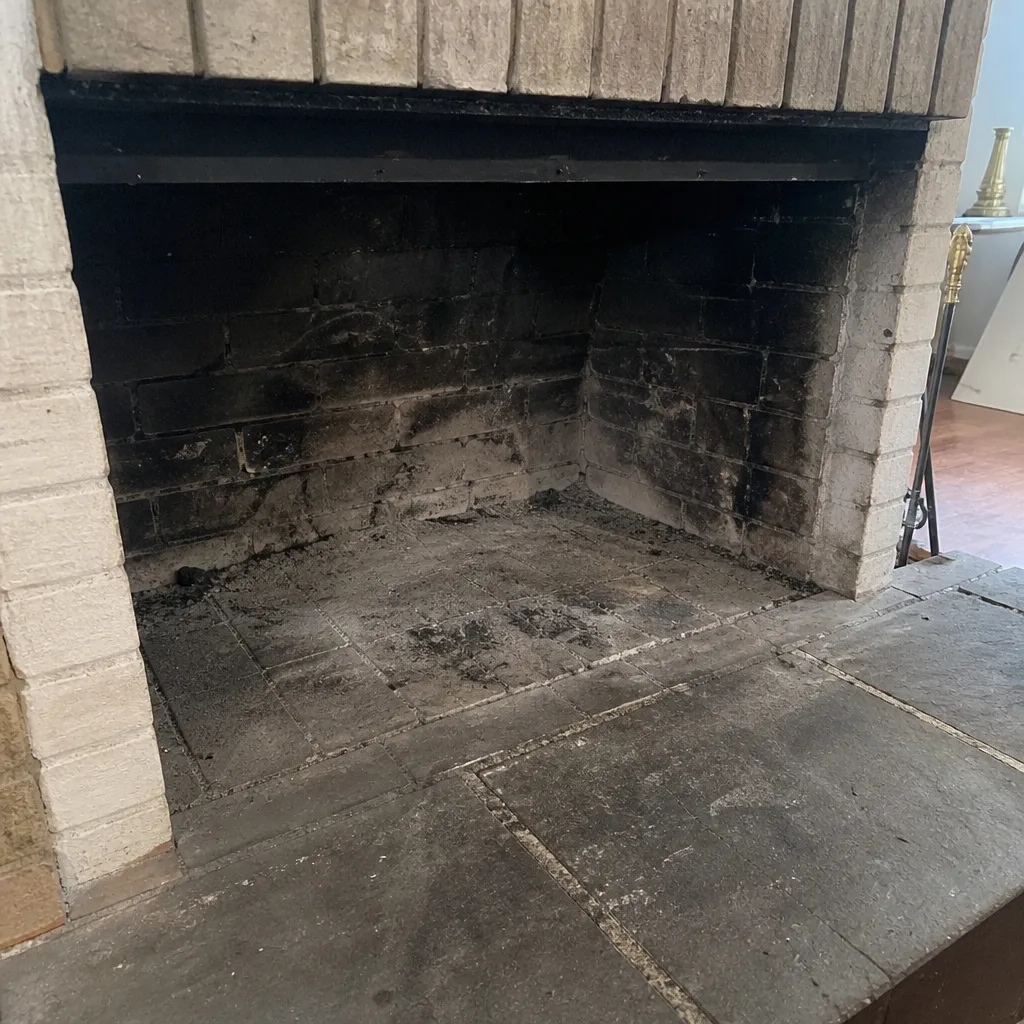 Before
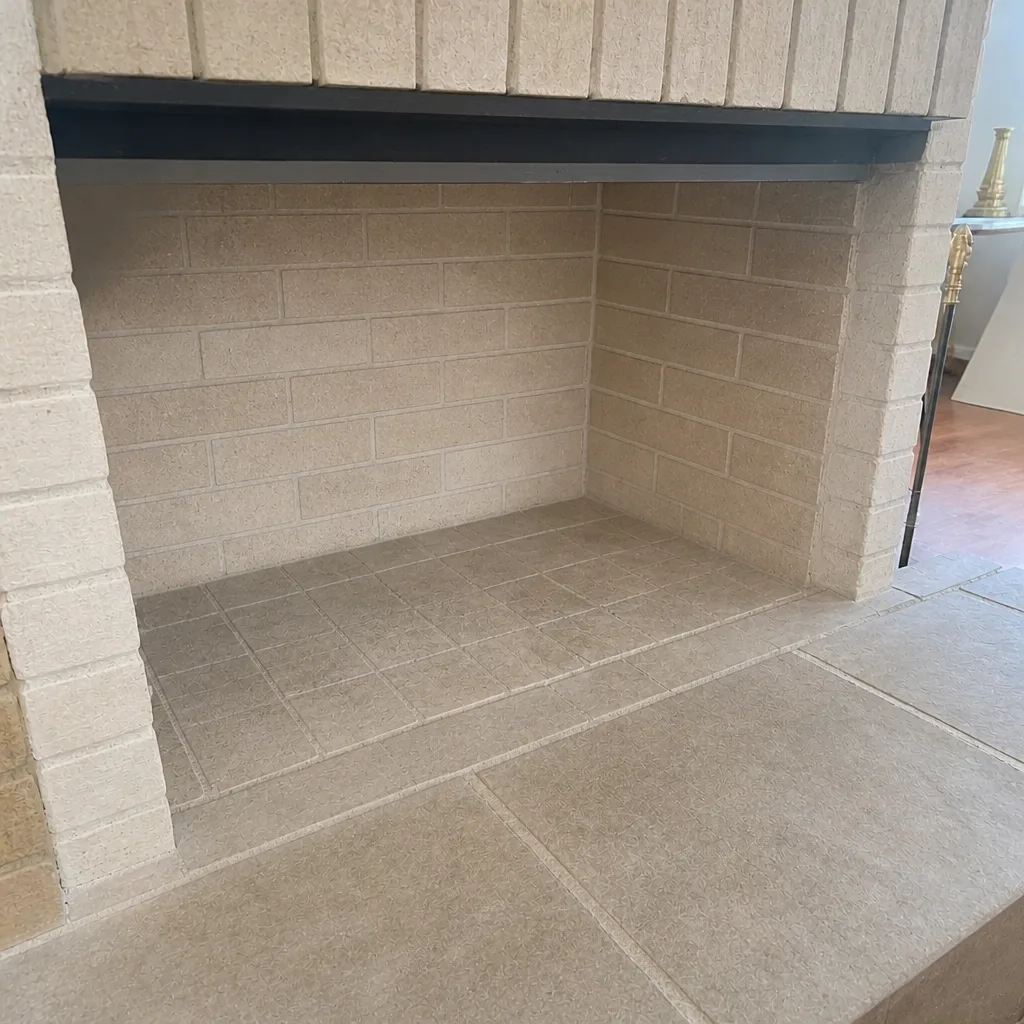 After
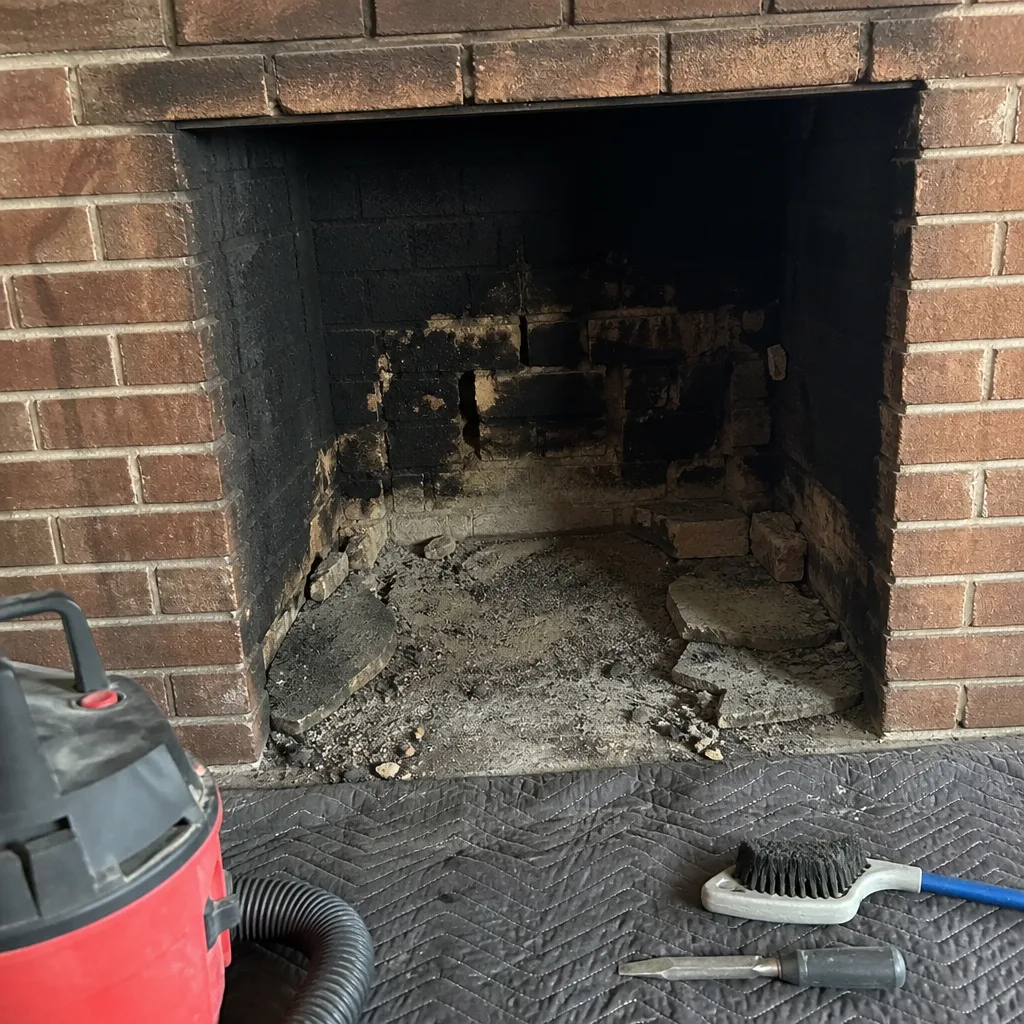 Before
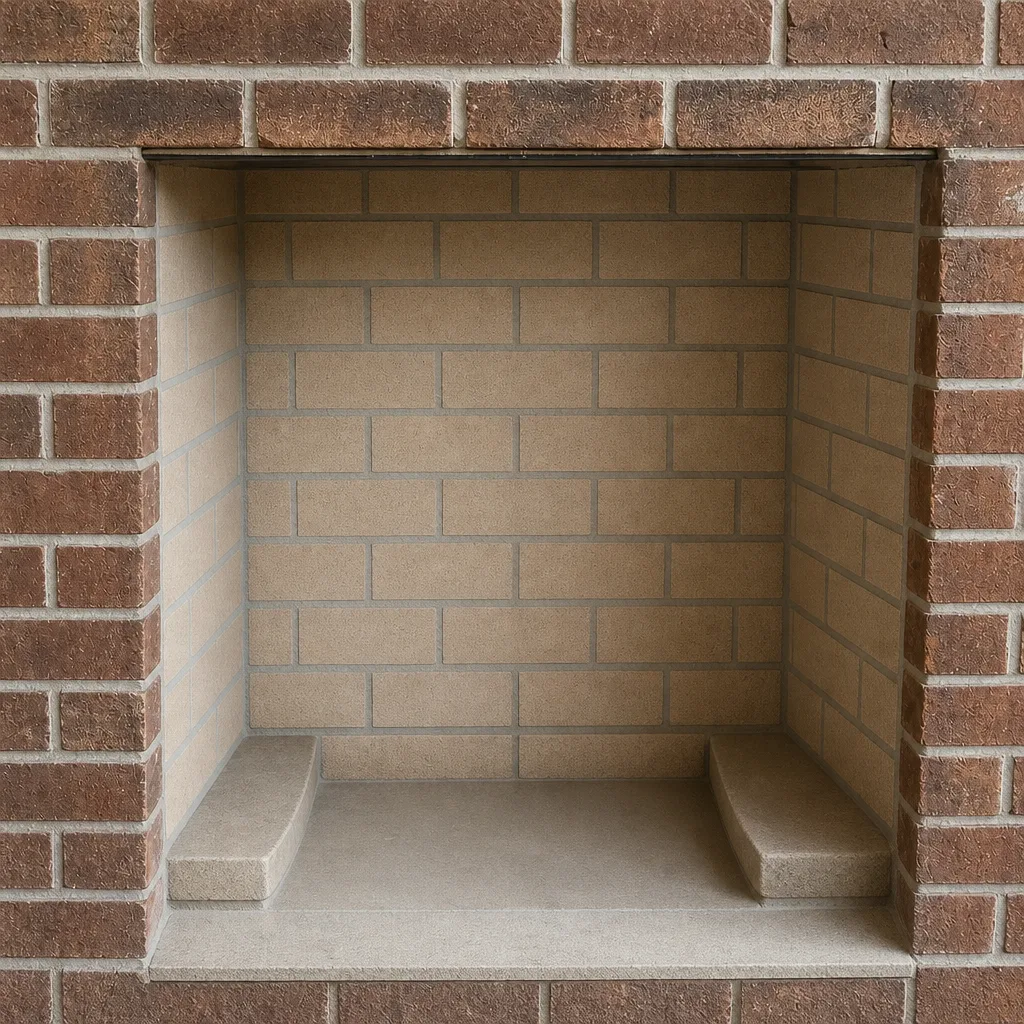 After
Frequently Asked Questions
Once a year for any chimney in active use, and that covers the inspection too. If you burn heavily through the season, the creosote level found at the last sweep may justify a mid-season cleaning. The condition of the flue, not the calendar alone, sets the timing.
A sweep cleans the flue; an inspection documents the condition of every component from cap to firebox. They’re usually done in the same visit, but an inspection can be booked on its own. If you’ve had a sweep recently and want a diagnosis of a specific problem, the inspection is the service you’re after.
Yes, cap and crown condition is visible from the ground with binoculars or from the roofline, and those are safe homeowner checks. What you can’t verify yourself is the liner and smoke chamber, which need a camera. Leave the roof and the flue interior to a technician.
Small surface cracks that aren’t holding water can be repaired. Spalling, flaking concrete, or a crown that’s lifted away from the flue means it’s time to consider replacement. The decision comes down to whether the crown can still shed water; if it can’t, patching a surface that won’t hold isn’t worth the visit.
Hail hits the cap and crown first and hardest, and the damage isn’t always obvious from the ground at first. A dented cap opens a path for water, and a chipped crown holds moisture that freeze-thaw then widens. Checking after hail season, while the damage is small, is when the repair is simplest.
The date, service performed, condition of all seven components, photos, camera findings, creosote level, and what’s pending. The goal is a record the next technician can read and understand without starting from scratch. That’s what turns a single visit into a trend line.
The Bottom Line
A Commerce City chimney isn’t one thing to maintain; it’s seven components with seven different failure modes, and the checklist is what keeps you from missing one. Check from the cap down to the firebox every year, run the roofline and hearth items yourself, and let a camera and a trained technician handle the liner and smoke chamber. Log what you find, because the trend matters more than the snapshot. Pay attention to hail, freeze-thaw, and fire-season residue, since that’s what this climate throws at a chimney. When something fails the checklist, deal with it in the same season it showed up. That’s the difference between a maintenance budget and a repair bill.
Call (855) 619-0680 for a free estimate on a sweep, an inspection, or a repair. We answer 24/7. Fast dispatch from 7am to 7pm, Sunday through Friday.
Written by the team at Commerce City Chimney Sweep.